
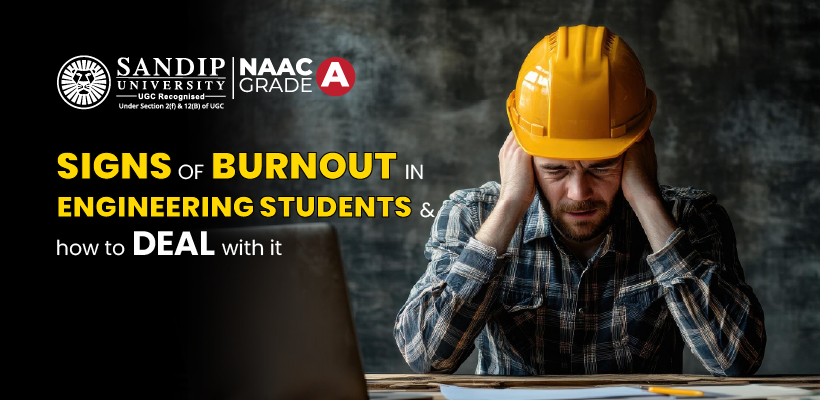
Academic burnout is a reality in most students’ lives. However, engineering students are often at the highest risk of academic burnout. The reward of being an engineer is very high, leading to a high-stakes career and being at the forefront of an innovative industry. Hence, the effort and dedication it takes to make it to the top are high as well. There is a huge difference between burnout vs laziness in college. When a student underperforms, most often it is chalked up to laziness, when it may not be the case. Actual burnout can creep up on you without warning, and can wreck your academic journey.
Let us take a closer look at the signs of academic burnout, the reason behind students facing burnout, and how to deal with it as an engineering student:
What are the Key Signs of a Burnout in Engineering Students?
There are many engineering student burnout signs that you can look out for to take precautions before it is too late. Some of the top signs of academic burnout are:
-
Physical Exhaustion
Constant physical exhaustion is one of the first signs of burnout. Physical symptoms like lack of sleep, constant headaches, and frequent stomach aches are signals from your body that you need to pause and face the fact that you may be undergoing burnout. When you feel physically drained even on holidays, know that this is your wakeup call to combat burnout.
-
Emotional Detachment and Irritation
One of the most common signs of burnout is how you start feeling about the people around you and your academic work. If you are feeling emotionally detached from your peers and are constantly irritated about irrelevant things, you may be facing burnout. Lacking the emotional energy to care about projects and events that once excited you is a leading sign of academic burnout.
-
Cognitive Impairment
Do you feel like your brain is not functioning to its previous capacity? Do you feel like you are struggling to solve problems or tackle academic issues which were easier for you earlier? This is a sure shot sign of academic burnout. Another clear-cut sign is being forgetful of random things like where you may have stored your projects on your computer, or forgetting key components of your daily schedule.
-
Persistent Fatigue
Your fatigue is persistent. No amount of sleep or restoration is helping in making you feel rejuvenated. These are consistent signs of a burnout. If you are dealing with insomnia, relying on medicines and pills to function daily, it is time you take a pause and reevaluate your situation, and look for self-care tips for engineering students to deal with your situation.
Why are Engineering Students at a Higher Risk of Academic Burnout?
Since engineering is such a high-stakes field, the risks of academic burnout are also higher, because:
- Higher Cognitive Workload: Engineering students are constantly using their mental faculties to solve complex problems and understand advanced technologies, which requires a great deal of energy and consistency.
- Unrelenting Quest for Perfectionism: Engineers are expected to be perfect in everything they do as even a small mistake can have catastrophic consequences in the real world. Such expectations of perfection can cause a huge strain on engineering students.
- Lack of Work-Recreation Balance: An engineering degree program is very demanding and leaves little to no time for rest, rejuvenation, and any kind of personal life. Such a schedule can wreak havoc on a student’s physical and mental health.
How to Recover from Academic Burnout as an Engineering Student?
Being burnt out is natural, and can happen to anyone. Here are some tips on how to bounce back from semester failure due to academic burnout:
-
Shift Your Academic Strategy
Focus on what you can control. Set goals like studying consistently for a few hours daily instead of cramming over the weekend. Break down large tasks to smaller achievable targets that can be completed in shorter periods of time for a sense of accomplishment.
-
Maintain a Balanced Schedule
Make time for things you enjoy. Let go of the mindset that any time that you are not glued to your books you are wasting time. Remember, all work and no play just makes you dull. Work out a manageable timetable with time allotted for recreation and rejuvenation without feeling guilty.
-
Use Your Campus Resources
Every campus has ample student resources that can be used to make your academic journey easier. Sandip University’s B.Tech wellbeing initiative includes counselling options for students who are facing academic burnout. Use the resources to break out of your burnout loop and get back on track.
-
Seek Human Support
Your peers are in the same boat as you. Talk to your friends, do not feel like you are a loser or imperfect in feeling like you need human support to make it through your academic journey. Your professors and student support staff are also at your disposal when you feel the need for human support.
-
Prioritise Your Physical Fitness
A fit body is home to a sound mind. This is true and once you take care of your physical health by sleeping for seven to nine hours, constantly hydrating yourself, taking power naps and power walks to keep yourself alert, you will feel the burnout slipping away.
Conclusion
These are some of the top signs of burnout in engineering students and what they can do about them. If you are someone who is facing academic burnout, seek help, and use the right resources to overcome this obstacle. No challenge is greater than your mental strength. Remember, your professors, parents, and peers are your well wishers who want you to excel in life as the best version of yourself. Good luck!
Start a healthy academic journey as an engineering student at Sandip University. Apply now!