
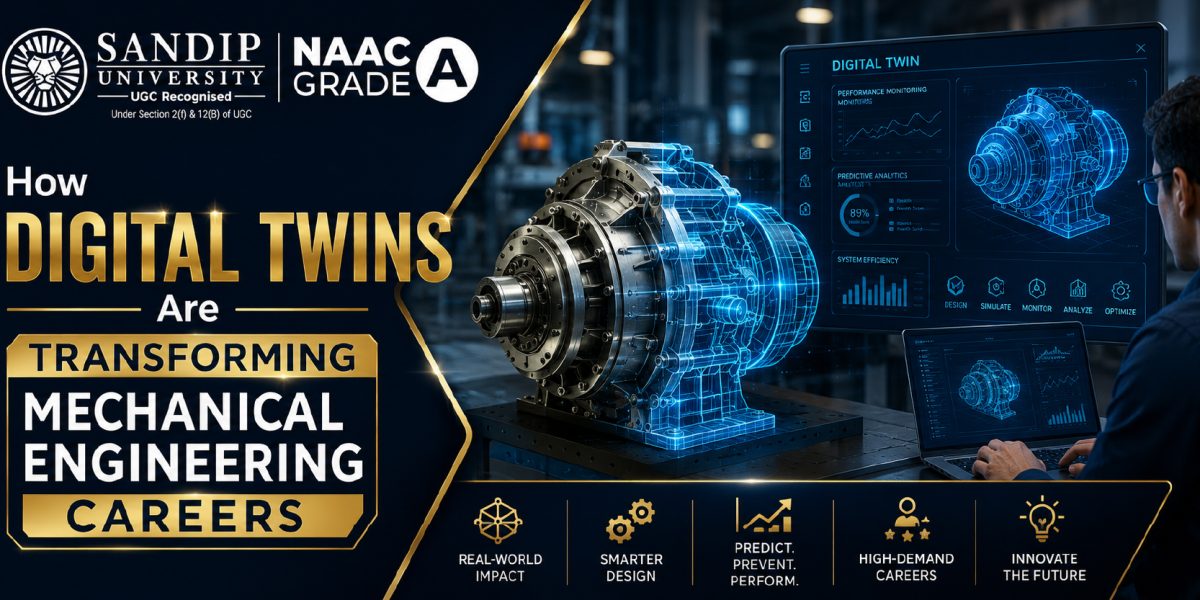
The traditional blueprint is dead, and the physical prototype is no longer the final frontier. A new digital reality has taken over in modern mechanical engineering. This revolution goes by the name of the digital twin. This is a virtual and real-time counterpart of a physical object, system or process. The digital twin technology careers are taking off and this is the time to make the most of this futuristic opportunity.
Mechanical engineers built their careers on tangible assets for a long time. They calculated stress tolerances on paper, machined physical components and ran destructive tests in specialised labs. Data streams from Internet of Things sensors redefine that entire workflow today. The digital twin technology is altering the responsibilities, skill sets and careers of mechanical engineers. Students must understand how digital twins are reshaping the profession if they want to survive and thrive in this evolving industry.
Shifting from Static Design to Dynamic Management
Earlier, a mechanical engineer’s job largely concluded once a product left the factory floor. Engineers handed the blueprints over to manufacturing and maintenance teams to move quickly to the next project. Digital twins permanently erase this boundary. The engineer’s relationship with the product spans its entire lifecycle because a digital twin continuously receives data from its physical twin.
- Monitoring Health: Real-time operational data can be tracked from assets located in remote places. This can help patients receive optimal healthcare even in remote places.
- Simulating Extreme Conditions: The virtual equipment can be tested remotely without threats from severe weather or heavy loads. This prevents physical damage to the equipment.
- Predicting Failure Points: The wear and tear of a component can be identified on time to ensure that regular maintenance can be scheduled. This prevents the equipment from complete failure.
- Collaborating with Teams: Teams of data analysts, operations managers and service technicians work closely to ensure that the project is running smoothly.
- Unlocking New Roles: Mechanical engineers can transition into latest job roles for a specialised career path.
Redefining Simulation and Testing
Testing a mechanical system required immense time and financial resources before the digital twin technology. Engineers built multiple physical prototypes, subjected them to extreme loads and analysed the wreckage. These tools still relied on idealised static assumptions even though simulation software reduced physical testing. Digital twins inject real-world variables into the simulation equation. Mechanical engineers now run continuous high-fidelity simulations using actual operating data.
- Input of Live Data: Data such as factory floor temperature spikes can be directly fed into the simulation models.
- Observing Immediate Stress: Engineers can witness how real-time fluctuations instantly impact internal machinery components.
- Replacing Manual Testing: Testing can be automatised to reduce loss of resources on wasteful manual testing modules.
- Synchronise Sensor Data: Physical sensor networks can be combined with predictive physics models to ensure maximum accuracy.
New Skills Required for Digital Twin Technology Careers
A degree in pure mechanical engineering is no longer sufficient for career progression with the rise of the rise of digital twins. The modern mechanical engineer must be a professional who can blend core physics with digital literacy. Students must expand your toolkit across several key areas to secure the most lucrative roles:
- Data Analytics: Engineers need to know how to clean, interpret and extract actionable insights from large datasets.
- IoT Architecture: Professionals must learn how to connect physical hardware devices to cloud networks to ensure seamless data transmission.
- Coding and Scripting: Engineers learn how to code scripts in Python to automate data flows and customise twin behaviours.
- System Integration: Engineers need to align electrical, software and mechanical systems within a single digital ecosystem.
New Career Pathways in Digital Twin Technology
Companies across aerospace, automotive, energy and manufacturing are adopting digital twins and they are creating entirely new job titles. The job descriptions of tomorrow look very different from those of a decade ago. The mechanical engineering future trends predict that these are the top career pathways in this field:
- Digital Twin Developers: They design the digital architecture that mirrors physical assets and ensures real-time synchronisation.
- Predictive Maintenance Engineers: These professionals analyse twin data to schedule repairs at the exact moment a machine needs servicing.
- Virtual Commissioning Engineers: These engineers build and test entire factory production lines virtually before ordering physical steel.
- Digital Transformation: These experts guide industrial companies through the process of upgrading legacy hardware with virtual systems.
- Asset Optimisation Managers: These professionals oversee fleets of connected devices to maximise operational efficiency and reduce energy waste.
Future Trends in Industry 4.0 Engineering Careers
Digital twins elevate the strategic importance of mechanical engineers within an organisation. In the past, business executives often viewed engineering teams as cost centres that required heavy research and development budgets. Digital twins turn engineers into revenue generators and risk mitigators.
- Providing Precise Insights: Professionals deliver accurate data to organisations regarding operational efficiency and carbon footprints to executive teams.
- Accelerating Career Progression: Professionals who master digital transformation technologies are able to rise to leadership roles in their career.
- Ensuring Stability: A B.Tech in Mechanical Engineering can future-proof your career in the long run against automation.
- Boosting the Budget: Engineers will be able to push for a larger budget for their projects based on the digital twin technology.
Conclusion
Digital twins allow engineers from some of the top engineering colleges in Nashik to focus on creativity, innovation and problem-solving. This is done by automating repetitive tasks and reducing physical troubleshooting.
Students must actively lean into this transformation. Gain training in cloud platforms, experiment with IoT development kits and volunteer for digital transformation internships. The future belongs to the engineers who can navigate between the current and future expectations of the industry. Good luck!
Explore the B.Tech in Mechanical Engineering programme at Sandip University
Frequently Asked Questions (FAQs)
1) What is Digital Twin technology in Mechanical Engineering?
A digital twin is the virtual and real-time copy of a physical mechanical engineering system.
2) How are Digital Twins changing Mechanical Engineering jobs?
Digital twins are changing mechanical engineering job roles by making them more proactive to a problem instead of reactive.
3) Which industries use Digital Twin technology?
Industries like manufacturing, healthcare, pharmaceuticals, aerospace, construction, etc. are using the digital twin technology.
4) Is Digital Twin technology a future-proof career skill?
Yes, the digital twin technology is a future-proof career skill.