
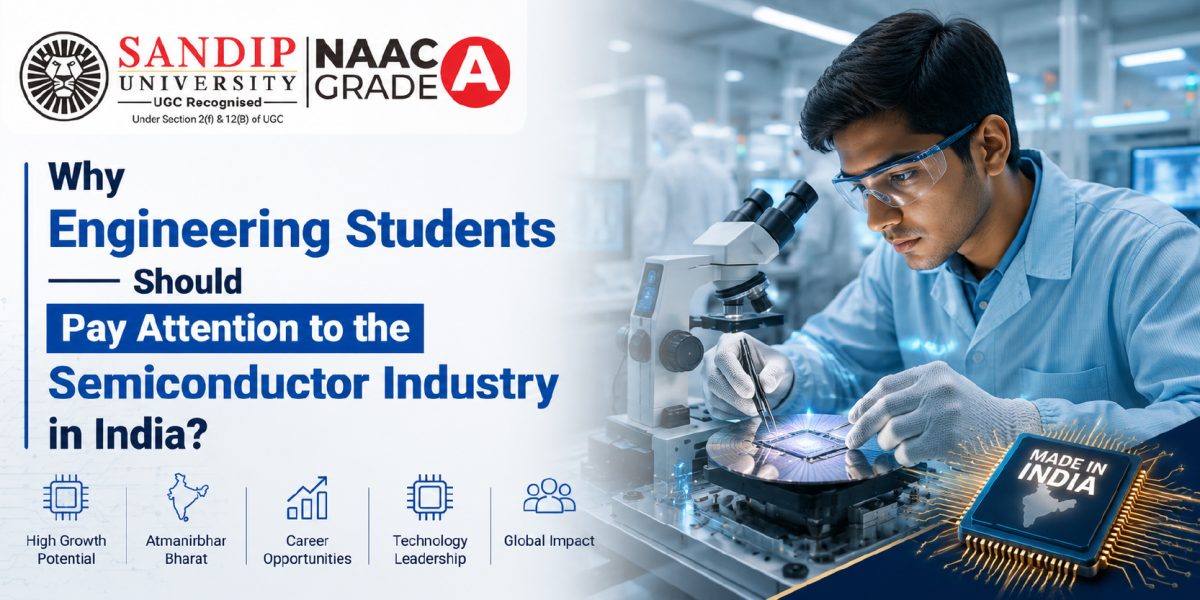
The semiconductor industry in India is booming right now. These tiny electronic components or microchips powers everything around you. Your smartphone, your laptop, electric vehicles and medical devices all need these chips to function.
For decades, India excelled only in designing these chips. Other countries handled the actual manufacturing. Today, a massive shift changes this reality. The Government of India, global tech giants and local businesses build a massive domestic chip ecosystem.
Engineering students must pay attention to this revolution. This sector offers incredible career security, high salaries and pioneering roles. This detailed blog post explains why the Indian semiconductor industry deserves your immediate attention and how you can ride this golden wave.
How is the Indian Government Backing the Chip Boom?
The Indian government drives this semiconductor revolution through aggressive policy support. Recently, the government introduced the India Semiconductor Mission 2.0 in the Union Budget. This new phase allocates massive funds to expand domestic capabilities. It focuses heavily on manufacturing equipment, raw materials and advanced research centres.
The government also offers up to 50% financial support to companies building chip manufacturing facilities, compound semiconductor plants and testing hubs. This aggressive backing builds immense confidence among global investors. You can trust this industry because the nation treats chip manufacturing as a top strategic priority.
Top Mega Factories Popping Up Across the Nation
You no longer just read about chip factories in textbooks. Companies build real, massive semiconductor fabrication plants, or fabs, on Indian soil today.
-
The Dholera Megaproject
Tata Electronics partners with Taiwan’s Powerchip Semiconductor Manufacturing Corporation to build India’s first commercial front-end semiconductor fabrication plant in Dholera, Gujarat. The mega factory will produce 50,000 silicon wafers every month. These wafers will supply the automotive, artificial intelligence and mobile device industries.
-
Progress of the Project
Micron Technology and Kaynes Semicon already started commercial shipments from their advanced testing and packaging facilities in Sanand, Gujarat. The chip map also covers other states. The government approved projects in Assam, Uttar Pradesh, Odisha and Andhra Pradesh.
These factories bridge the final gap in India’s technology ecosystem. They transition India from a technology consumer into a core technology builder.
How is the Demand for Thousands of Trained Engineers Rising?
This massive growth creates an unprecedented demand for skilled workers. Right now, a major talent gap challenges the market. India graduates hundreds of thousands of electronics engineers, but only a fraction possess immediate readiness for advanced fabrication and chip assembly jobs.
Some of the best engineering colleges in Maharashtra can help you build a thriving career in the semiconductor industry with the right qualifications and training. They are partnering with the government to train next-gen engineers to drive massive innovation in the semiconductor industry. Companies will compete aggressively to hire you if you acquire these specialised skills today.
What are the Top Semiconductor Engineering Career Opportunities in India?
Many students falsely assume that only Electronics and Communication Engineering students can enter this industry. B.Tech in Electronics Engineering can definitely help you gain access to this field, but it is not the only relevant program. The semiconductor sector actually demands a highly diverse mix of skills, such as:
- Electronics and VLSI Engineers: These engineers design the complex circuit layouts, manage power delivery and verify functional designs.
- Computer Science Engineers: These professionals develop the Electronic Design Automation (EDA) software tools. You also integrate artificial intelligence algorithms into advanced chip workflows.
- Mechatronics Engineers: They maintain the delicate robotics, precise machinery and automated cooling systems inside cleanrooms.
- Chemical and Materials Engineers: These engineers manage the complex chemical etching, gas deployment and silicon wafer purification processes.
How can You Prepare for Future Technology Careers?
You must act proactively during your college years to secure these premium jobs. Here are some ways in which you can prepare for the boom in tech careers:
- Pick the Right Electives: Selecting the right electives can really make or break your career prospects. Choose elective courses that focus on VLSI design, embedded systems, IT or nanotechnology.
- Master Essential Software: Knowing different kinds of software will give you an edge over your competition in the job market. Try and master programming languages and tools like Verilog, Python, VHDL and MATLAB for the extra edge.
- Enrol in Government Programs: There are many government programs available that can help you access specialised programs. Look for the Chips to Startup (C2S) program or specialised courses at the National Institute of Electronics & Information Technology (NIELIT).
- Apply for Industry Internships: An industry internship can help you gain real world work experience which will always shine on your resume. Apply for hands-on internships at global chip firms or local manufacturing facilities like Tata Electronics or Micron.
- Focus on Networking: It is important to network and build connections across the industry not just to find the right job but also to keep up with the latest trends in the industry. Participate in major industry conferences like SEMICON India to interact directly with global tech leaders and discover open job roles.
Conclusion
The semiconductor industry in India undergoes a massive, historic transformation. Massive state funds, rising mega factories and surging global investments turn India into a dominant global chip hub. Do not stick only to traditional career choices. Look closely at the hardware revolution happening right outside your campus. Prioritise your studies, learn the right hardware tools and secure your place in India’s bright semiconductor future. Good luck!